We live in a world that is constantly “on.” We are expected to be high-achievers at work, perfect parents at home, and enthusiastic partners in the bedroom. But what happens when the pilot light goes out?
If you’ve found yourself making excuses to go to bed early, or if the very idea of intimacy feels like just another item on a never-ending to-do list, you aren’t alone. Low libido—the medical term for a decreased interest in sexual activity—is something millions of people navigate. Yet, because it feels so personal, we often suffer in silence, feeling “broken” or worrying that our relationships are doomed.
The good news? Your sex drive isn’t a fixed setting. It is a dynamic part of your health that responds to your environment, your body, and your mind. This guide is designed to help you understand the “why” and, more importantly, the “how” of getting your groove back.
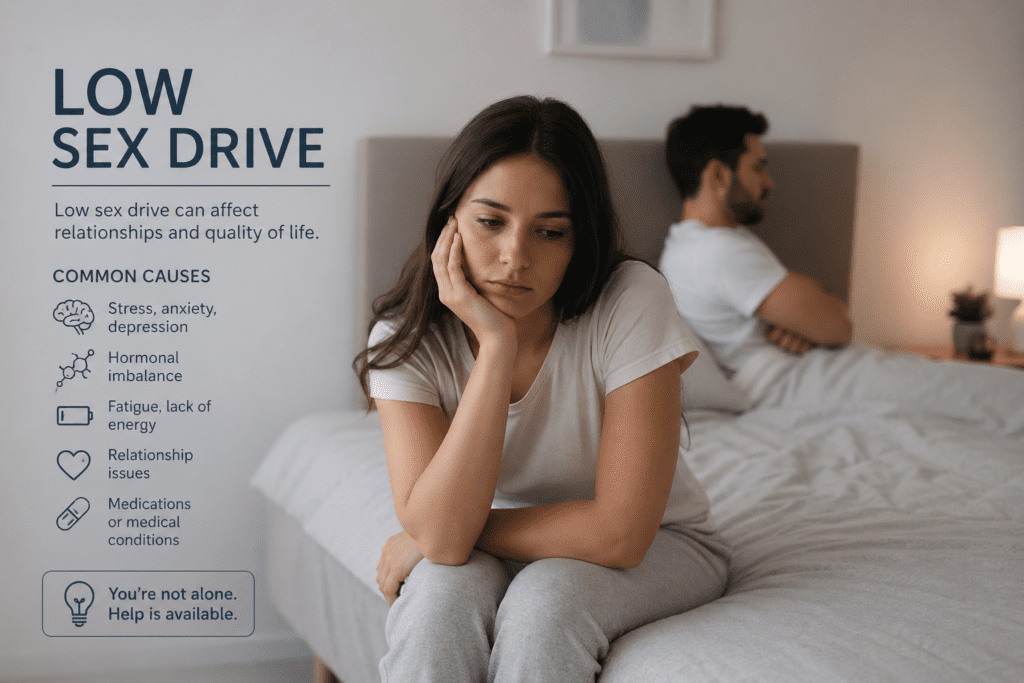
Part 1: Why Did My Libido Dip? (The Root Causes)
Think of your sex drive like a garden. If the soil is dry, the sun is too harsh, or there’s a pest problem, the flowers won’t bloom. You can’t just yell at the flowers to grow; you have to fix the environment.
1. The Physical Foundation
Our bodies are complex chemical factories. If the chemistry is off, desire is usually the first thing to be put on the back burner.
- Hormonal Imbalances: Hormones are the messengers that tell your body to feel desire. In men, low testosterone (Low-T) can lead to a total lack of interest. In women, the shift in estrogen and progesterone during menopause, pregnancy, or even the postpartum period can make sex feel like a distant memory.
- The “Side Effect” Culprits: Many people don’t realize that their pursuit of health might be affecting their sex life. Antidepressants (specifically SSRIs), blood pressure medications, and even some hair loss treatments are notorious for dampening desire.
- Chronic Fatigue: We underestimate the power of exhaustion. If your body is using every ounce of energy just to get through the workday, it will shut down “non-essential” functions like libido to preserve resources.
2. The Mental Architecture
Sex starts in the brain, not the body. If your mind is a chaotic mess of stress and worry, it’s almost impossible to transition into an intimate headspace.
- Stress and the Cortisol Spike: When you’re stressed, your body produces cortisol. Evolutionarily, cortisol is meant for “fight or flight.” You don’t want to be intimate when you’re running from a tiger—or a deadline. High cortisol levels actively suppress sex hormones.
- Body Image and Confidence: If you don’t feel good in your skin, you probably won’t want someone else touching it. Negative self-talk is one of the most effective mood-killers in existence.
- Mental Health Struggles: Depression and anxiety don’t just make you feel “sad” or “nervous”; they physically numb the brain’s reward centers, making the pleasure of sex feel unreachable.
3. Relationship Dynamics
You can’t separate your sex life from your “day life.” If there is tension over finances, chores, or parenting, that tension follows you into the bedroom. “Roommate Syndrome”—where you become efficient co-managers of a household but forget how to be lovers—is a very real phenomenon that naturally lowers desire.
Part 2: Practical Solutions to Restore Your Drive
Getting your spark back isn’t about “trying harder.” It’s about being smarter with your health and communication.
Step 1: Consult a Professional
The most important thing you can do is stop guessing. Many people waste years on “miracle supplements” from the internet that do nothing. Instead, seek out clinical expertise.
A specialist like Dr. Jolly Arora can help bridge the gap between “feeling off” and finding a solution. Whether it’s through comprehensive blood panels to check your hormone levels or discussing the psychological barriers you might be facing, professional guidance is the most direct path to recovery. Doctors like Dr. Jolly Arora understand that sexual health is a pillar of overall wellness, providing a safe, judgment-free space to discuss issues that might feel embarrassing but are actually very treatable.
Step 2: The “Lifestyle Audit”
Small shifts in your daily routine can have a massive impact on your libido.
- Prioritize Sleep Like Your Life Depends On It: Sleep is when your body regulates hormones. If you’re consistently getting less than seven hours, your testosterone and estrogen levels will take a hit. Try a “digital sunset”—no phones 60 minutes before bed—to help your brain wind down.
- Move Your Body (But Don’t Overdo It): Moderate exercise improves blood flow (essential for arousal) and boosts confidence. However, extreme over-training can actually lower libido by putting the body under too much physical stress. Find the “Goldilocks” zone.
- Watch the “Mood Killers”: Excessive alcohol might make you feel more courageous in the moment, but it is a central nervous system depressant that can cause “brewer’s droop” in men and decreased lubrication/sensation in women.
Step 3: Change How You Think About “Desire”
There is a huge myth that sex should always be spontaneous. For many people, especially those in long-term relationships, desire is responsive.
This means you might not feel “in the mood” while you’re watching TV. But, if you start with a back rub, a long kiss, or some light physical touch, your body “wakes up” and the desire follows. Don’t wait for the lightning bolt to strike; sometimes you have to rub two sticks together to start the fire.
Step 4: The “Non-Sexual” Date Night
If every time you spend time alone with your partner there is an unstated pressure to have sex, you’ll start to avoid that alone time. Break the cycle by planning “non-sexual” intimacy. Go for a walk, try a new hobby together, or play a board game. Rebuilding the friendship and the “fun” factor of your relationship often acts as a natural aphrodisiac.
Part 3: Nutrients and Supplements (The Natural Boost)
While you should always talk to a doctor before starting a new regimen, certain nutrients are scientifically linked to sexual health:
- Zinc: Vital for testosterone production and sperm quality.
- Magnesium: Helps with relaxation and improves sleep quality, which in turn supports hormones.
- Vitamin D: Often called a “pro-hormone,” a deficiency in Vitamin D is strongly linked to low libido in both men and women.
- Omega-3 Fatty Acids: These improve blood flow and reduce inflammation, keeping the vascular system (which controls arousal) healthy.
Conclusion: Patience is Key
Reclaiming your sex drive isn’t an overnight process. It’s a journey of self-discovery and health. Be kind to yourself. If you had a broken leg, you wouldn’t expect yourself to run a marathon the next day. Treat your libido with the same patience.
By focusing on your physical health, managing your stress, and seeking help from experts like Dr. Jolly Arora, you are taking the power back. You deserve a life that feels vibrant, connected, and full of pleasure. The spark isn’t gone—it’s just waiting for you to clear the path.
Frequently Asked Questions (FAQs)
1. Is it normal for my sex drive to change with the seasons?
Yes! Many people experience a dip in the winter due to less sunlight (lower Vitamin D) and higher levels of melatonin, which can make you feel more sluggish. Conversely, summer often brings a natural boost in energy and desire.
2. How do I know if my low libido is “medical” or “psychological”?
It’s often a bit of both. However, a good rule of thumb is: if you still have sexual fantasies or desire when you’re alone but not with your partner, it might be relational or psychological. If you have no desire even in your own thoughts or dreams, it’s more likely to be hormonal or physical.
3. Can birth control pills really kill my sex drive?
For some women, yes. Certain pills increase a protein called Sex Hormone Binding Globulin (SHBG), which “mops up” free testosterone in your body, leading to lower desire. If you suspect this, talk to your doctor about switching to a different formulation.
4. Does masturbation lower my desire for my partner?
Not necessarily. For some, it helps keep the “plumbing” working and keeps them in touch with what feels good. However, if you are using porn or solo play as a way to avoid intimacy with your partner, it can create a gap in your relationship.
5. What is the first step I should take if I’m worried about my libido?
The first step is communication. Talk to your partner so they don’t feel rejected, and then book an appointment with a specialist like Dr. Jolly Arora to rule out any underlying health issues. Taking action is the best way to reduce the anxiety surrounding the problem.