What PCOS Really Is (and What It Is Not)
PCOS is not simply “cysts in the ovary”. Doctors usually make the diagnosis when two of three things are present: irregular or missing ovulation, signs of high male hormones such as acne or excess facial hair, and ovaries that look polycystic on an ultrasound. Several Indian studies put the number of affected women somewhere between one in ten and one in five, depending on the group studied. So if this is your diagnosis, you are in very large company.
The usual PCOS symptoms include:
- Irregular periods, which may come late, rarely, or not at all for months
- Unwanted hair on the face, chest or abdomen (hirsutism), along with oily skin and stubborn acne
- Thinning of scalp hair
- Weight gain, especially around the waist
- Dark, velvety patches on the neck or underarms
- Difficulty conceiving
- Mood swings, anxiety and poor sleep
You do not need every item on that list. Two or three, if they persist, are reason enough to get checked.
The Hormonal Tangle Behind the Symptoms
Here is the short version of what goes wrong. The ovaries make more androgens, the so-called male hormones, than they should. Many women also develop insulin resistance, where the body needs more insulin than normal to handle sugar. High insulin pushes the ovaries to make even more androgens, and the loop keeps feeding itself. People loosely call this a hormonal imbalance in women, and it explains why PCOS is as much a metabolic condition as a gynecological one, with a higher long-term risk of diabetes, high cholesterol and fatty liver.
Does PCOS Affect Your Sex Life?
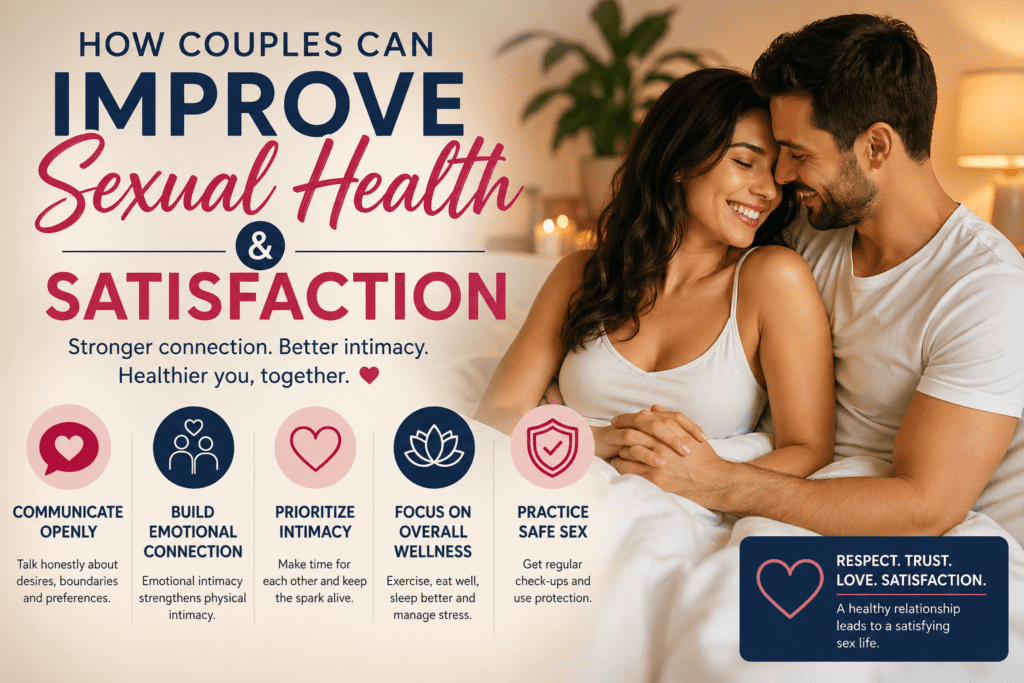
This is the question women ask me most often, usually quietly and often at the very end of the consultation: does PCOS affect sex life? It can, though not in the same way for everyone. Studies comparing women with and without PCOS tend to find more difficulty with desire, arousal and satisfaction in the PCOS group. Yet some women notice no change, and a few feel their desire is higher because of raised androgens. So when someone asks me can PCOS cause low sex drive, I say yes, it can, but it is rarely one single reason. Here is how the pieces usually fit together.
Hormones and metabolism
Hormonal swings, high insulin and poor sleep can leave you drained and flat long before desire gets a chance. Some women also face vaginal dryness, especially while on certain hormonal pills, and that can turn intimacy into painful intercourse. Once sex hurts, the mind starts avoiding it.
How you see yourself
Acne, unwanted hair, weight gain and thinning hair chip away at confidence. If you do not feel attractive, desire struggles to follow. In my experience, body image worries are one of the loudest yet least discussed reasons behind a switched-off libido in PCOS.
Mood, stress and sleep
Anxiety and low mood are more common with PCOS. Chronic stress raises cortisol and wrecks sleep, and both pull desire down. Add the constant questions from relatives about marriage and motherhood, and it is no surprise that many women feel intimacy has become one more test they are failing.
Medicines and the pressure to conceive
A few medicines, including some contraceptive pills and anti-androgen tablets, can dull desire in certain women. And when sex becomes a monthly task timed around ovulation, spontaneity disappears. Couples begin to feel like patients rather than partners, and sexual satisfaction drops for both.
| Factor | Without PCOS | With PCOS |
| Menstrual cycle | Usually regular, roughly every 21 to 35 days | Often late, infrequent or absent |
| Ovulation | Predictable, most months | Irregular or missing in many cycles |
| Androgen levels | Within the normal range | Often raised, leading to acne and extra hair |
| Insulin response | Typically normal | Resistance is common, even at normal weight |
| Sexual desire | Shifts with life stage and stress | May be lower, unchanged or occasionally higher; strongly shaped by mood and self-image |
| Time to conceive | Most couples conceive within a year | Often longer; usually needs ovulation support |
| Long-term checks | Routine health review | Regular screening of sugar, cholesterol and blood pressure advised |
PCOS and Fertility: What Is Really Happening
The core issue is anovulation, which simply means the ovary does not release an egg regularly. No egg, no conception. PCOS is among the most common causes of ovulation-related infertility, but it is also one of the most treatable. A woman may ovulate only a few times a year, so the window for a natural pregnancy is narrow and hard to predict.
So, can I get pregnant with PCOS? Yes. Many women conceive naturally, some after lifestyle changes alone and others with simple medication. The ones who struggle most are usually the ones who waited years, hoping their cycles would sort themselves out.
A proper evaluation usually includes:
- A detailed menstrual history and physical examination
- Hormone tests such as LH, FSH, testosterone and prolactin, along with thyroid function
- Fasting sugar, insulin and a lipid profile
- AMH, to understand how many eggs are in reserve
- A pelvic scan to look at the ovaries and uterus
- A semen analysis for the husband, because male factors play a meaningful part in many couples’ difficulty and are checked far too late
Please do not skip that last point. Fertility is a couple’s issue, and a husband’s report can change the whole treatment plan.
Treatment Options Compared
There is no single best treatment. What works depends on your age, weight, test results, how long you have been trying and whether you want a baby right now. Here is how the common options compare.
| Option | How it helps | Best suited for | Good to know |
| Lifestyle changes | Improve insulin response and help cycles restart | Almost every woman; always the first step | A 5 to 10 percent weight loss can restore ovulation in overweight women; needs consistency |
| Letrozole | Triggers the ovary to release an egg | Women who are not ovulating and want to conceive | Prescription only; timed with ultrasound monitoring |
| Metformin | Improves the body’s response to insulin | PCOS with insulin resistance or raised sugar | Can upset the stomach at first; usually settles |
| IUI | Places prepared sperm in the uterus at ovulation | Mild male factor, or after ovulation induction | Success depends on age, open tubes and semen quality |
| IVF | Eggs are collected, fertilized in the lab and transferred | When simpler methods have not worked or other factors exist | Higher cost; needs a well-equipped centre |
Ovulation-inducing medicines should only be taken under supervision. Borrowing a friend’s prescription can lead to overstimulation, side effects or a missed underlying problem.
Lifestyle Changes That Genuinely Help
Lifestyle is not a lecture here; it is treatment. Even a modest drop of 5 to 10 percent in body weight can bring back regular cycles in overweight women, and it lifts mood and confidence along the way. This is why PCOS and weight loss are discussed together so often, though lean women can have PCOS too and need the same attention to insulin and sleep.
A practical PCOS diet plan does not need expensive superfoods:
- Swap maida, white bread and sugary drinks for jowar, bajra, ragi and whole wheat
- Add protein to every meal, such as dal, paneer, curd, eggs, sprouts or soya chunks
- Fill half your plate with vegetables and keep fruit to sensible portions
- Reach for a handful of nuts or roasted chana instead of biscuits and namkeen
- Aim for about 150 minutes of exercise a week, including two sessions of strength training
- Protect seven to eight hours of sleep
Stay away from crash diets and “PCOS cure” powders sold online. They usually unsettle hormones and mood rather than fix them.
Bringing Desire Back: Practical Steps
If you are wondering how to increase libido with PCOS naturally, begin by treating the cause rather than chasing a quick fix. Desire usually returns when cycles, insulin, sleep and mood improve together.
- Get your vitamin D, iron, B12 and thyroid levels checked, since deficiencies quietly lower energy and interest
- Pick movement you enjoy; brisk walking and strength training both lift mood
- Make room for stress relief, whether that is breathing exercises, yoga or an unscheduled evening
- Use a water-based lubricant if there is dryness or discomfort
- Take the pressure off. Kissing, massage and cuddling count as intimacy even when intercourse is not the goal that night
- Ask your doctor whether a current medicine could be playing a part, and never stop it on your own
- Consider sex therapy if anxiety around intimacy has become a habit
Many women tell me the biggest relief came from simply saying it out loud to a doctor who did not judge them.
Your Partner’s Role Matters More Than You Think
PCOS and marriage are closely tied in Indian households because expectations around children arrive early. A supportive husband changes everything. He can attend appointments, get his own semen test done without embarrassment, and understand that her low desire is not rejection. Talk openly about what feels good, what hurts and what worries you. Silence does more damage than the condition itself.
Three Things I Wish Every Family Knew
- PCOS is not caused by something a woman ate or did wrong
- PCOS does not mean you will never be a mother
- PCOS is not only a weight problem; slim women are affected too
When to See a Specialist
Please do not wait for a crisis. Book a consultation if:
- Your periods have been missing for three months or come very unpredictably
- You have been trying to conceive for 12 months (6 months if you are over 35)
- Your interest in intimacy has stayed low for months and it troubles you or your partner
- Sex is painful
- Acne, hair growth or weight gain is increasing quickly
Get Expert Help in Jaipur
If you are searching for the best gynecologist for PCOS in Jaipur or a sexologist in Jaipur who will listen without judgement, our Vaishali Nagar clinic brings both under one roof. Dr. Renu Arora, an experienced gynecologist, looks after cycle, ovulation and fertility concerns, while Dr. Jolly Arora, who holds a fellowship in sexual medicine, addresses desire, pain and intimacy. The approach is private, unhurried and focused on you and your partner, and PCOS treatment in Jaipur at our clinic is planned around your own reports rather than a standard prescription.
Prefer not to travel? A confidential online sexologist consultation is available too, so you can discuss your concerns from home.
Book your private consultation today
WhatsApp Call: +91 91666-36900
Clinic: B Well Medihub, B2/6, Gandhi Path, Chitrakoot, Vaishali Nagar, Jaipur (near Mall of Jaipur, adjoining Liberty Showroom)
Timings: Monday to Saturday 9 AM to 1 PM and 5 PM to 7 PM; Sunday 9:30 AM to 11:30 AM
Frequently Asked Questions
1. Can PCOS be cured permanently?
There is no permanent cure at present, but PCOS is very manageable. With the right mix of lifestyle changes, medicines and regular follow-up, most women get steadier cycles, clearer skin, better mood and, when they want it, a healthy pregnancy.
2. Does every woman with PCOS lose interest in sex?
No. Some have lower desire, some notice no change and a few feel more desire than before. What matters is whether the change bothers you. If it does, there are causes we can look for and treat.
3. Do I have to stop my PCOS pills before trying for a baby?
Contraceptive pills must be stopped when you want to conceive, but please never stop or change any medicine without advice. Your doctor will plan the switch so your cycles are tracked and ovulation is supported properly.
4. How long does it take to conceive after starting treatment?
It differs from woman to woman. Many begin ovulating within a few cycles, and a good number conceive within six to twelve months. Age, weight, sperm quality and fallopian tube health all influence the timeline.
5. Can PCOS affect arousal or orgasm?
Indirectly, yes. Low mood, fatigue, anxiety, dryness and self-image worries all reduce arousal and can make orgasm harder. When these are addressed, many women find their sexual response improves.
6. Can thin women have PCOS?
Yes. Lean PCOS is common in Indian women, and insulin resistance can exist even at a normal weight. Irregular cycles or excess hair should never be brushed aside just because you look slim.
7. Will losing weight alone fix my periods?
For many overweight women it helps a great deal, but it is not always enough. Some also need medicines to regulate cycles or trigger ovulation. Think of weight loss as a strong first step, not the only one.
8. Is painful sex a part of PCOS?
PCOS itself does not usually cause pain. Dryness, infection, endometriosis, pelvic floor tightness or anxiety are more likely culprits. Because these are treatable, please get examined rather than putting up with pain.
9. Are herbal or ayurvedic supplements safe for PCOS?
Some are harmless, while others contain unlisted ingredients or interfere with medicines. Myo-inositol has some supporting evidence for improving ovulation and insulin response, but discuss any supplement with your doctor before starting.
10. Should I see a gynecologist or a sexologist first?
If your main worry is cycles or pregnancy, start with a gynecologist. If desire, pain or intimacy troubles you, a sexologist is the right person. At our clinic you can meet both, so your care stays coordinated.
Final Thoughts
PCOS can touch your cycle, your confidence, your desire and your plans for a family, but it is manageable, and you do not have to work it out alone or in silence. The earlier you get a proper evaluation, the more options you have. Take the first step this week.