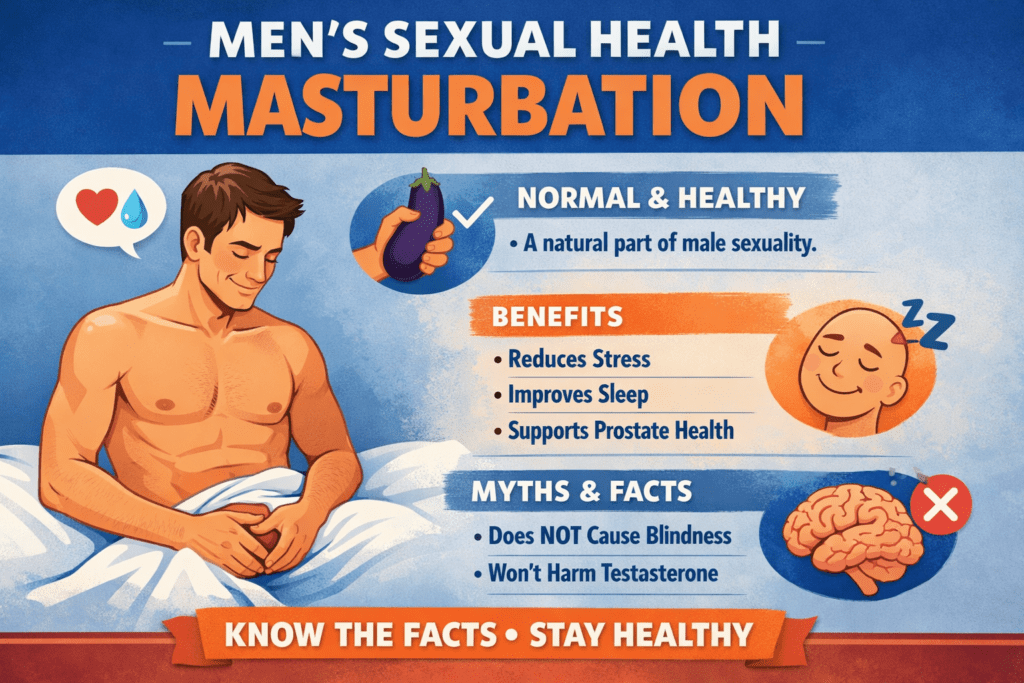
Let’s be real—when was the last time someone had an open, honest conversation with you about masturbation?
For most men, the answer is “never.”
Instead, what we grow up hearing are half-truths, scary warnings, and awkward advice from friends, the internet, or outdated beliefs. Over time, these myths can create guilt, anxiety, and confusion about something that is actually very natural.
So, let’s clear everything properly—without judgment, without exaggeration, and without making it uncomfortable.
This guide is here to help you understand what’s true, what’s not, and how masturbation actually fits into men’s sexual health in a healthy, balanced way.
Why This Topic Deserves a Real Conversation
Sexual health is not just about relationships or reproduction—it’s about understanding your own body. And masturbation is often one of the first ways men explore that.
But here’s the problem: silence around the topic creates space for misinformation.
Experts like Dr. Jolly Arora often highlight that lack of awareness—not the act itself—is what causes stress and confusion in people.
When you don’t have facts, myths take over.
What Is Masturbation (In Simple Terms)?
Masturbation is self-stimulation of the genitals for sexual pleasure. It can happen occasionally or regularly, depending on the person.
It usually starts during puberty, when hormonal changes increase sexual awareness, but it can continue throughout life.
There’s nothing unusual about it. It’s a private activity, and how often someone does it varies from person to person.
Why So Many Myths Exist
If masturbation is normal, then why are there so many misconceptions?
A few reasons:
- Cultural and social taboos
- Lack of proper sex education
- Fear-based messaging in adolescence
- Influence of unverified online content
Over time, these ideas become “beliefs,” even though they have no scientific backing.
Let’s break them down one by one.
Common Masturbation Myths (And the Real Truth)
Myth 1: Masturbation Causes Physical Weakness
This is one of the oldest and most common myths.
What people believe:
“Masturbation drains energy and makes the body weak.”
Reality:
There is no scientific evidence that masturbation causes long-term weakness.
After orgasm, your body releases hormones like prolactin and oxytocin, which make you feel relaxed or sleepy. That’s why some people mistake it for “weakness.”
But this is temporary and completely normal.
Myth 2: It Leads to Infertility
Many men worry that frequent ejaculation will reduce their ability to have children.
Reality:
Your body produces millions of sperm every day. Masturbation does not “use up” your fertility.
In fact, regular ejaculation can even help maintain sperm health by clearing older sperm from the system.
Only extremely frequent ejaculation within a very short time (like multiple times a day) may temporarily reduce sperm count—but it’s not a long-term issue.
Myth 3: Masturbation Causes Erectile Dysfunction (ED)
This myth creates unnecessary fear and performance anxiety.
Reality:
Masturbation does not cause erectile dysfunction.
ED is usually linked to factors like stress, anxiety, poor lifestyle habits, or medical conditions such as diabetes or heart disease.
In fact, masturbation can sometimes help men understand their sexual response better, which may actually improve confidence.
Myth 4: It Affects Penis Size
This is one of the most widespread fears among young men.
Reality:
Masturbation has zero impact on penis size.
Size is determined by genetics, hormones during puberty, and natural development—not by sexual activity.
Myth 5: It Causes Hair Loss
You may have heard that ejaculation leads to hair fall due to loss of nutrients.
Reality:
Hair loss is mainly caused by genetics and hormonal factors, particularly a hormone called DHT.
Masturbation has nothing to do with it.
Myth 6: It’s Mentally Harmful
Some people believe masturbation leads to depression or mental instability.
Reality:
Masturbation itself is not harmful to mental health.
However, guilt, shame, or obsessive behavior around it can create stress. The problem is not the act—it’s the mindset around it.
Myth 7: Only Single Men Masturbate
There’s a common belief that men in relationships shouldn’t need masturbation.
Reality:
Even men in healthy relationships may masturbate.
It doesn’t automatically mean dissatisfaction with a partner. It’s simply a personal form of sexual expression.
The Actual Benefits of Masturbation
Now that we’ve cleared the myths, let’s talk about the real advantages.
1. Helps Reduce Stress
Masturbation triggers the release of dopamine and endorphins—chemicals that improve mood and reduce stress.
After a long day, it can act as a natural stress reliever.
2. Improves Sleep Quality
Many men find it easier to fall asleep after masturbation.
This is because the body enters a relaxed state post-orgasm, making sleep come more naturally.
3. Builds Sexual Awareness
Understanding what feels good helps improve confidence and communication in sexual relationships.
You become more aware of your body and responses.
4. Safe and Risk-Free
Unlike partnered sexual activity, masturbation carries no risk of sexually transmitted infections (STIs) or unintended pregnancy.
5. May Support Prostate Health
Some research suggests that regular ejaculation could be linked to better prostate health, although more studies are still needed.
When Masturbation Becomes a Problem
Let’s be honest—anything in excess can become unhealthy.
Masturbation is generally safe, but it can become an issue if:
- It starts interfering with work or daily routine
- It becomes compulsive or uncontrollable
- It replaces real-life relationships
- It causes physical discomfort or irritation
- It’s used to escape emotional problems
In such cases, it’s not about stopping completely—it’s about regaining balance.
How Much Is Too Much
There’s no fixed “right” number.
Some men masturbate daily, others occasionally, and some rarely. All of these can be normal.
Instead of counting frequency, focus on impact:
- Are you able to manage your responsibilities?
- Are you physically comfortable?
- Is it affecting your mental well-being?
If everything feels balanced, there’s usually no issue.
The Role of Guilt and Cultural Beliefs
In many cultures, masturbation is associated with shame or secrecy. This often leads to unnecessary guilt—even when the behavior itself is harmless.
This guilt can cause:
- Anxiety
- Low self-esteem
- Confusion about sexual health
As experts like Dr. Jolly Arora often point out, education plays a key role in removing these fears.
When you understand the facts, the guilt usually fades away.
Healthy Habits for Better Sexual Health
Here are some simple, practical tips to maintain balance:
1. Keep It Private and Comfortable
Choose a clean, safe, and comfortable environment.
2. Avoid Overdependence on Porn
Excessive consumption of explicit content can create unrealistic expectations about sex and relationships.
3. Maintain Overall Health
Your sexual health is connected to your overall well-being.
Focus on:
- Regular exercise
- Balanced diet
- Proper sleep
- Stress management
4. Listen to Your Body
If you feel discomfort, irritation, or fatigue, give your body time to rest.
5. Don’t Hesitate to Seek Help
If you feel your habits are becoming compulsive or affecting your life, talking to a healthcare professional is a smart step—not something to be embarrassed about.
Masturbation and Relationships
A healthy relationship is built on communication and understanding.
Masturbation doesn’t automatically harm relationships. However, it can become an issue if:
- It replaces intimacy
- It creates emotional distance
- It’s hidden due to guilt
Open communication with your partner can prevent misunderstandings.
Final Thoughts
Masturbation is one of the most misunderstood aspects of men’s sexual health. The myths surrounding it have been passed down for generations, often without any scientific proof.
Here’s what you should remember:
- It is normal
- It is generally safe
- It does not cause the problems many people fear
The real issue is not masturbation—it’s misinformation and guilt.
When you replace myths with facts, you gain clarity, confidence, and a healthier mindset toward your own body.
FAQs
1. Is it okay to masturbate every day?
Yes, as long as it doesn’t interfere with your daily life, health, or relationships.
2. Does masturbation reduce sperm count permanently?
No, it does not. Any temporary change is short-lived and not harmful.
3. Can masturbation cause pimples or acne?
No direct link exists. Acne is mainly caused by hormones, skin type, and hygiene.
4. Is masturbation bad for mental health?
Not at all. However, guilt or compulsive behavior around it can affect mental well-being.
5. When should I consult a doctor?
If you experience pain, addiction-like behavior, or emotional distress related to sexual habits, it’s best to seek professional advice.